
Handmade Plates and Handmade Dinner Plates in Glass for Hotels and Restaurants
Handmade plates at MyGlassStudio begin with a material decision. Glass fusing is not a shortcut to a handcrafted result, it is a specific production technique where raw glass and pigments are placed together in a kiln and fused at high temperature. The texture on the underside of a fused plate is the natural imprint of that process. A machine-pressed plate has a smooth underside. A hand-fused plate has character, and the two are not the same thing.
For hotels and restaurants, that distinction matters beyond aesthetics. Handmade plates for restaurants carry the visual language of considered production, the kind that reads as intentional on a table rather than generic. The subtle variation that comes from handcraft is not a tolerance issue. It is the point.
Every piece in the MyGlassStudio range is produced in our workshop in Pernik, Bulgaria, under in-house quality control. Browse our restaurant dinnerware and restaurant tableware collections to see the full range of formats available for hotel and restaurant specification. Learn more about how we work on our designers and makers page.
Beauty of Imperfection
“MyGlassStudio makes me feel warm. How can I explain?
I can feel the warmth of the personality who created them.”
Satoshi Nakata, Raku Raku restaurant, Kyoto, Japan
Everything in nature – the sea, hills, valleys, our body – is curved. We feel comfort with curves. It is a primal shape.
Machines produce a straight line.
Machines produce perfection.
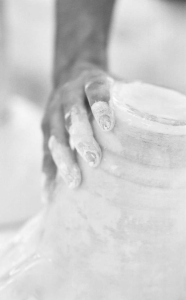
Hands produce beautiful imperfections.
A “boutique factory” like MyGlassStudio,
is where people focus on values like creativity, dedication, and sharing.
Our purpose is to plant all around the world the
“Secret Beauty of Imperfection”:
the softness and quality of the Curve.

Handmade Dinner Plates: Design, Craft, and Professional Performance
How handmade glass plates perform in professional service
Handmade dinner plates in glass carry the same performance specification as industrially produced alternatives, dishwasher safe at up to 90°C for 1,000 or more cycles, oven safe to 120°C, tested for impact resistance against the ASTM C368 benchmark. The handcrafted production method does not reduce the operational standard. It adds a visual layer that mass production cannot replicate.
Artisan dinnerware in glass achieves this through the fusing process itself. Colours are not applied on top of the glass, they are fused into the body at high temperature. The result is a surface that does not fade, chip, or change colour under repeated professional washing. The piece looks the same after two years of service as it did on delivery.
For chefs specifying plating surfaces, handmade plates for restaurants offer something that standard tableware does not: a surface with a specific visual identity. A piece developed around a restaurant’s colour palette or a chef’s plating language is a different tool from a white plate chosen from a catalogue. Browse our restaurant plates and plate ware and restaurant bowls collections for formats used across hotel and restaurant projects. Read our artisan dinnerware post for the design and production context behind these pieces.
Bespoke and Custom Handmade Plates
Custom handmade plates at MyGlassStudio follow the same production process as the standard range. A bespoke colour direction, a printed logo, or a signature shape developed for a specific chef concept, each of these goes through the same kiln, the same quality control checks, and the same stress testing. Handmade dinner plates developed for a bespoke brief carry the same ASTM-tested performance as the standard range. The craft does not change because the specification is custom. Explore our bespoke dinnerware page for the full custom brief process.
FAQ
What makes glass plates genuinely handmade?
Glass fusing is the process: raw glass and pigments are placed in a kiln and fused at high temperature. The natural imprint of the kiln surface on the underside of the plate is the mark of that process. Machine-pressed plates do not have it.
Are handmade plates suitable for professional kitchen use?
MyGlassStudio handmade plates are dishwasher safe at up to 90°C, oven safe to 120°C, and impact tested against the ASTM C368 standard. That is the same specification as industrially produced tableware. The production method does not lower the bar.
Do handmade plates vary in size or appearance between pieces?
Small batch variations are part of handcraft production. Quantities may vary from ordered quantities by up to +/-10%. That variation is always disclosed before an order is confirmed, not after.
Can handmade dinner plates be customised with a hotel or restaurant’s branding?
Custom colour, printed branding, and bespoke shapes are all available. Every custom piece goes through the same kiln and the same QC process. The specification does not change because the brief is custom.
What is the difference between handmade plates and mass-produced tableware?
Pressing produces a smooth, consistent underside. Fusing produces a surface with the natural imprint of the kiln, texture, depth of colour, and slight variation between pieces. Those are not defects. They are what handcraft looks like.
How are the colours applied to handmade glass plates?
Pigments are fused into the glass body at high temperature, not coated on the surface. They cannot fade, flake, or become hazy with use or repeated washing.
Are handmade plates for restaurants available in multiple formats?
Yes. The range covers dinner plates, pasta plates, bowls, and a range of specialty pieces. All are produced using the same fusing technique and meet the same performance specification.
What is artisan dinnerware?
Tableware produced through maker-led craft processes rather than industrial pressing. Glass fusing is the technique we use, it has Hellenistic-era origins, our founders were the first to industrialise it at scale, and every piece is still made in our workshop in Pernik.
How do handmade plates hold up in a dishwasher?
1,000 or more professional cycles at up to 90°C for standard colours. The colour is not a layer sitting on the surface, it was fused into the glass body during production. Nothing applied on top means nothing to lose.
Can handmade plates withstand stacking in a professional kitchen?
Designed for professional use, including stacking. The risk in mixed-material stacking is an unglazed porcelain foot ring contacting the glass surface, that is rougher than glazed porcelain and abrasive enough to leave marks. Glass on glass does not carry the same risk.
What size ranges are available for handmade dinner plates?
Handmade dinner plates are available across multiple diameters to suit different plating formats. Specific sizes are confirmed at the specification stage or available in the catalogues.
How long does production take for a custom handmade plate order?
From confirmed purchase order to dispatch: approximately four to five weeks, covering four weeks in production and one to one and a half weeks in transit by courier.
Are MyGlassStudio handmade plates lead and cadmium free?
All pigments are non-toxic, lead-free, and cadmium-free. They pass both California Proposition 65 and Japanese food-contact regulations.
What is the minimum order quantity for handmade plates for restaurants?
Minimum quantities vary by product and finish. These are confirmed at the quoting stage before any commitment is made.
Where are MyGlassStudio handmade plates made?
All pieces are produced at our workshop in Pernik, Bulgaria, European Union. Design, production, quality control, and distribution are all handled in-house.
Artisan Dinnerware: Unique Designer Plates For Modern Restaurants And Hotels
Modern artisan dinnerware and artisan-crafted plates for distinctive culinary presentation
Artisan dinnerware represents the pinnacle of bespoke design and craftsmanship in professional dining. For restaurants, chefs, and hotels, these pieces elevate the table setting, providing a refined canvas for contemporary cuisine. Each item is artisan-crafted, reflecting the expertise of designers and makers who combine traditional techniques with modern aesthetics.
Artisan plates and artisan dinnerware offer unique features — subtle asymmetry, innovative textures, and designer finishes — that make every dining experience extraordinary. Chefs appreciate how artisan-crafted dinnerware enhances food presentation, providing the ideal platform to showcase sauces, garnishes, and textures with elegance and precision. Glass artisan dinnerware adds an extra dimension, its clarity emphasizing the colors and layers of culinary creations, while also reflecting light to create a sophisticated ambiance.
In high-end hospitality, modern artisan dinnerware is more than functional tableware; it is an expression of style, identity, and attention to detail. Each plate communicates refinement, from small tasting menus to grand buffet displays. Designer artisan plates are often customized to align with the brand’s aesthetic, allowing restaurants and hotels to maintain a cohesive visual identity across all dining experiences.
Unique artisan dinnerware provides versatility, suitable for plated service, buffets, or multi-course tasting menus. Its combination of durability, elegance, and bespoke design ensures it performs under the demands of professional kitchens while maintaining its aesthetic appeal. Restaurants and hotels using artisan dinnerware signal a commitment to quality and an elevated guest experience, distinguishing themselves in a competitive market.
By choosing artisan dinnerware and artisan-crafted plates, hospitality operators can integrate functionality, artistry, and modern design into every table setting. These designer pieces ensure that every meal becomes a signature experience, reinforcing the establishment’s dedication to exceptional service and unforgettable dining. From bespoke glass artisan plates to fully customized collections, artisan dinnerware is essential for modern restaurants and hotels seeking to merge innovation with tradition. Explore the complete professional range within our hospitality catalogues.