

Artisan Dinnerware and What It Actually Means for a Restaurant
There’s a word that gets used a lot in hospitality right now, and it’s starting to lose its edge. “Artisan” appears on menus, on websites, on product spec sheets. Sometimes it means something real. Sometimes it’s just a marketing word sitting next to a product that came off a factory line with a thousand identical siblings. Restaurants and hotels that care about their dining experience deserve better than that, and so do their guests.
What Genuine Artisan Dinnerware Actually Is
So let’s be direct. Artisan dinnerware, genuine artisan dinnerware, is made by hand, piece by piece, by people who have spent years learning how materials behave, how shapes serve function, and how a finished piece should look and feel on a table. It’s not a style. It’s a process. And that process produces something that a machine-made plate simply cannot replicate.
At MyGlassStudio, every piece is handmade in glass. Colours are crafted by fusing pigments into the glass body at high temperature, not painted on the surface, not applied as a transfer. The result is a piece with depth, warmth, and a subtle variation that makes each one genuinely unique. That’s what artisan-crafted dinnerware actually looks like up close.
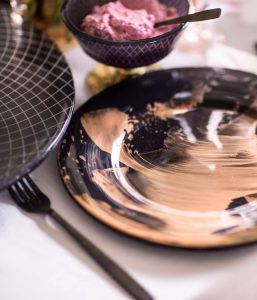
Handmade glass artisan dinnerware for hotel and restaurant dining. MyGlassStudio.
Why Artisanal Dinnerware Changes the Guest Experience
Here’s something worth thinking about. When a guest sits down at a beautifully set table, they pick up a plate before they pick up a fork. They handle it, weigh it in their hands, look at it. That moment, before any food arrives, is forming an impression. And that impression is either building perceived value or quietly undermining it.
Presence, Warmth, and the Signal Quality Sends
Artisanal dinnerware does something that standard tableware can’t. It has presence. There’s a warmth to a hand-pressed glass plate that a machine-stamped piece doesn’t have. There’s a subtlety in the colour, a slight variation from piece to piece, a depth in the surface, that tells a guest, without a word being spoken, that this place pays attention. That kind of attention is the whole story of a memorable dining experience.
For restaurant owners and hotel F&B directors, that story has a commercial dimension too. Guests who feel the quality of what they’re eating off are guests who photograph their food, share it, and come back. The table setting is part of your brand identity, and artisan dinner plates carry that identity in a way that commodity tableware never will. Furthermore, for hotels where the dining experience is core to the property’s positioning, the choice of dinnerware is an FF&E decision as much as a purchasing one.
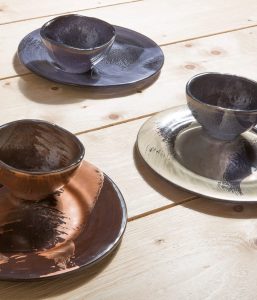
Glass artisan plates crafted for restaurant brand identity and guest experience. MyGlassStudio.
Artisan Plates. Shape, Texture, and the Craft Behind Each Piece
Not all handmade pieces are created equal. The craft matters, and so does the material. Glass, when worked by skilled hands, produces shapes and surface qualities that other materials simply don’t. The slight curve of a rim pressed by hand. The way light catches the edge of a fused colour. The translucency that makes a glass artisan dinner plate look alive on a table, not just placed on it.
How Each Piece Is Made, and Why It Holds Up
Each piece that leaves the MyGlassStudio workshop has been through a controlled process: pigments fused at firing temperature, an annealing cycle that runs up to 18 hours, a quality check at every stage. The result is a piece with a retardation value below 250nm at every point, which means structural consistency, no weak points, and a surface that holds up through professional service. It’s also dishwasher-safe at 90°C / 194°F and certified lead- and cadmium-free.
That combination of handmade quality and professional durability is what makes artisan plates from MyGlassStudio different from decorative craft pieces that look beautiful in a showroom but don’t survive a full restaurant service season. We make these pieces for hospitality, not despite the handmade process, but because of it. To explore the range of handmade glass pieces available, visit our handmade plates page or browse the restaurant dinner plates collection.
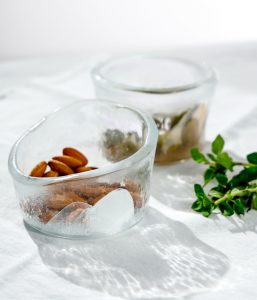
Handcrafted glass artisan tableware, texture, depth, and surface quality for fine dining. MyGlassStudio.
Custom Made and Bespoke. Artisan Tableware Built Around Your Concept
One of the genuine advantages of working with an artisan manufacturer is the ability to go fully custom. Off-the-shelf dinnerware gives you a set of choices someone else made. Bespoke artisan tableware gives you pieces designed around your concept, your colour palette, your dining room’s aesthetic language, your brand.
How the Custom Made Process Works
At MyGlassStudio, the custom made process starts with a brief. You bring the concept, the interior references, the F&B direction, the mood you’re building, and we translate that into a glass collection. We develop colours to match your palette. We select and adapt shapes to suit your service format. The result is artisan tableware that is genuinely yours, not a variant of something forty other properties are already using.
This is particularly valuable for hotels where the dining experience needs to carry the property’s visual identity from the room to the table. Additionally, for independent restaurants building a distinctive brand, a customized dinnerware programme is one of the most effective ways to make the table itself part of what guests remember. Explore what a bespoke commission looks like on our bespoke dinnerware page, and see the broader hospitality range at restaurant dinnerware.
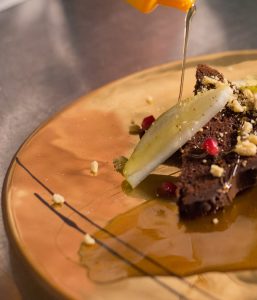
Bespoke custom made glass artisan dinnerware for hotel and restaurant concepts. MyGlassStudio.
Durability. Because Beautiful Pieces Need to Last
Let’s address the question that comes up every time someone considers a handmade programme over a standard one. Is it durable enough for professional use?
Built for Hospitality, the Honest Durability Case
The honest answer: it depends entirely on who made it and how. Glass artisan dinnerware from MyGlassStudio is built for hospitality from the ground up. The fusing process bonds colour into the glass body, not onto it, so there’s no surface coating to crack, chip, or fade. The annealing cycle eliminates internal stress points. We test every piece for chip and scratch resistance under professional service conditions.
In practical terms, that means dishwasher-safe at 90°C / 194°F, resistant to standard kitchen handling, and consistent in finish across a full service season. For more detail on how our quality standards work in practice, the dinnerware quality page covers the full specification. For further reading on how artisan tableware is reshaping the dining experience in leading hospitality concepts, Hospitality Design covers the trend in depth. Similarly, the World’s 50 Best Restaurants documents how top-ranked dining rooms are making tableware central to their guest experience strategy.
Handmade and durable aren’t opposites, not when the craft is this deliberate. That’s the whole point of glass artisan dinnerware built for professional hospitality.
FAQ
What is artisan dinnerware and how is it different from standard restaurant plates?
Artisan dinnerware is made by hand rather than by machine. Each piece is individually crafted, which produces subtle variations in surface and finish that give handmade tableware a warmth and presence that mass-produced plates cannot replicate.
Is artisan tableware durable enough for daily restaurant and hotel service?
Yes, when made for professional use. MyGlassStudio artisan glass dinnerware is dishwasher-safe at 90°C / 194°F, certified lead- and cadmium-free, and built to withstand high-frequency service conditions without loss of finish.
Can artisan dinnerware be custom made to match a restaurant’s brand identity?
Yes. MyGlassStudio develops fully bespoke artisan dinnerware collections matched to a restaurant or hotel’s interior palette, concept, and service format. Custom colour, shape, and finish options are all available.
Why choose glass for artisan plates over other handmade materials?
Glass is non-porous, non-reactive, and allows colour to be fired directly into the material rather than applied to the surface. This produces a depth and clarity of finish that ages beautifully and holds up through professional service.
How long does it take to produce a bespoke artisan dinnerware collection?
Lead times vary by complexity and volume. For bespoke commissions, we recommend starting the brief at least 12–16 weeks before the required delivery date to allow for design development, sampling, and production.