

The Italian Dinnerware Collection: Glass Tableware Inspired by Italian Design
The Italian table is not a neutral surface. It is an argument for a particular way of eating , unhurried, generous, and colour-forward. The italian inspired tableware collection from MyGlassStudio is built around that argument, expressed through wide-rimmed dinner plates, trattoria style plates, and deep pasta bowls designed for hotel and restaurant service. The palette comes directly from the Italian larder: the deep red of a ripe tomato, the muted green of asparagus, the warm yellow of lemon rind. These are not abstract colour choices. They are the colours of the food itself, translated into the glass that carries it.
The collection spans a full restaurant cover. First, deep pasta bowls. Also, wide-rimmed dinner plates. Also, organic-shaped appetizer plates suited to the irregular beauty of antipasto presentation. And small side dishes. Each format has its own logic, and yet the palette connects them. As a result, a table set from this collection reads as considered without being matched, warm without being themed. View the Italian Tableware Collection Catalogue for the complete format overview.
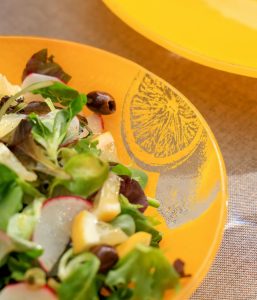
Deep glass bowl in lemon yellow part of the Italian-inspired collection by MyGlassStudio.
What separates a colour-led collection from a novelty is how the colours work with food rather than against it. A deep red wide-rimmed plate does not suit every dish. It asks the kitchen to make a choice. For example, a pale carpaccio on that surface creates a contrast a white plate cannot produce. A pasta bowl in asparagus green gives a ricotta and herb filling something to sit against. A lemon-toned side dish under a grilled seafood course makes the plate part of the composition rather than its background. So the colour is a decision, not a default.
Glass Changes What This Collection Can Do
Glass is not the traditional material for Italian-inspired tableware, however. Ceramic, terracotta, and majolica have held that ground for centuries. But glass brings a quality those materials cannot match: the colour runs through the body of the piece rather than sitting on its surface. Because of this, a deep red glass plate is not coated red. It is red through the material. It also reads differently under candlelight than under a service light, and differently against white linen than against dark stone. That depth is specific to glass, and it changes how the table reads.
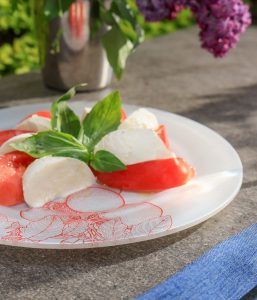
Wide-rimmed dinner plate in deep tomato red. The colour runs through the glass body, not on its surface.
The Italian design dinner plates in this collection are also non-porous, dishwasher-safe, and built for the service volumes that hotel restaurants and Italian trattoria-style venues run on. A tomato-red rimmed plate handles the acidity of a tomato sauce, the fat of a ragu, the residue of a pesto without any degradation to its colour or surface over time. For an F&B team choosing tableware for four or five services a week, therefore, that durability is not a supporting argument. It is the decision.
Glass in Practice: Durability and Craft
The bespoke project for Il Riccio at Jumeirah Capri Palace demonstrates what that glass-and-colour approach produces in a southern Italian coastal context. The collection was designed around the visual identity of Capri , marine motifs, a palette of deep blue and white, and a design specificity that made the table inseparable from the setting. Because of that specificity, the result is a table where the plate does not frame the experience. It is part of it. Read the full case study at the Il Riccio bespoke seafood tableware project.
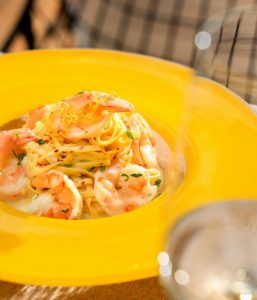
Glass pasta bowl in muted yellow, from the Italian-inspired collection by MyGlassStudio.
Because the process is handmade, each piece also carries subtle variation , in the weight distribution, in the depth of colour, in the surface character. However, this is not inconsistency. It is evidence of craft, and it produces a table that looks like a working restaurant rather than a catalogue display. The Italian style dinnerware in this collection is made to be used, not exhibited.
The Lemon, Asparagus and Tomato Palette in a Restaurant Context
Colour-forward tableware works differently in a restaurant context than in a domestic one. At home, the plate is seen once. In a restaurant, it is seen across a room, across a service, across a season. The lemon, asparagus, and tomato palette in this collection is stable enough to hold that repeated reading without becoming tired. These are not seasonal accent colours, so they carry the weight of a long-term commitment. They are the permanent tones of the Mediterranean table.
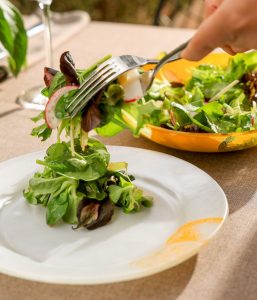
Organic-shaped appetizer plate in lemon yellow. The palette references the actual colours of Italian cuisine.
The trattoria style plates in the collection apply this to more informal service formats. A trattoria cover, for example, does not need the geometric restraint of a Michelin-starred table. Instead, it needs warmth, generosity, a surface that does not announce itself. The organic shapes and earth-toned palette of these trattoria style plates also fit that register without effort. A tomato-red wide-rimmed plate, a deep green pasta bowl, an asparagus-toned appetizer dish placed alongside each other read as a family on the table rather than a matched set. That distinction is therefore exactly what a restaurant trying to build an atmosphere rather than execute a format needs to get right.
Wallpaper’s best restaurant design of 2025 , a reference that shows how the most design-forward openings treat the plate as part of the room, not apart from it. Browse the Italian Palette colour scheme to see how the full colour mood of the collection translates into a tableware palette across formats.
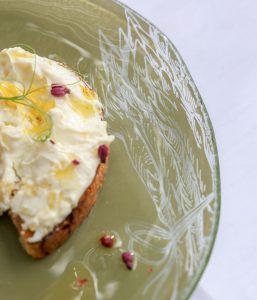
Organic glass appetizer plate in the asparagus palette. Suited to antipasto and informal Italian service formats.
Bespoke Production and the Full Cover
MyGlassStudio also produces bespoke versions of this collection for hotels and restaurants working to a specific brand brief. A property with a strong Mediterranean identity might request the asparagus and tomato palette with a custom motif , a botanical form, a coastal reference, a property mark , fired directly into the glass body. In fact, the motif is not applied to the surface. It is part of the piece, and it survives the service conditions a commercial kitchen demands.
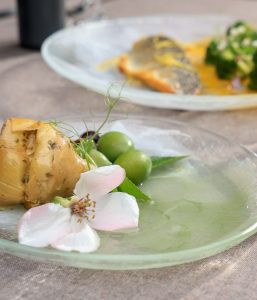
Small glass appetizer plate from the Italian-inspired collection, available in bespoke colour and motif configurations.
For the standard collection, the wide-rimmed plates, deep bowls, organic appetizer formats, and side dishes are all available in the Italian-inspired palette. Browse the Rimmed Dinner Plates collection for the wide-rim formats, and see the Designer Pasta Plates post for how pasta-specific plate shapes change what a bowl or rimmed format can do for a pasta menu.
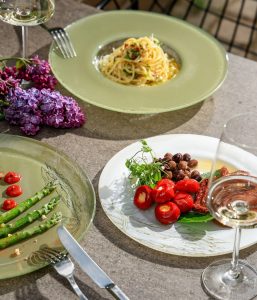
Wide-rimmed glass dinner plates in the Italian-inspired palette. Available in deep red, asparagus green, and lemon tones.
FAQ
What is the Italian Inspired Tableware collection by MyGlassStudio?
A range of handmade glass dinnerware drawing on the colours and forms of the Italian table , deep reds, asparagus greens, lemon yellows , designed for hotel and restaurant service.
Are the plates available in custom colours or patterns?
Yes. MyGlassStudio produces bespoke versions with custom colours and motifs fired directly into the glass, aligned to a specific brand brief or property identity.
What plate formats does the collection include?
The collection covers deep pasta bowls, wide-rimmed dinner plates, organic-shaped appetizer plates, and side dishes , a full restaurant cover in the Italian-inspired palette.
Is the glass dinnerware dishwasher-safe for restaurant use?
Yes. Every piece is non-porous, lead-free, and rated for commercial dishwasher cycles under standard restaurant service conditions.
What makes glass better than ceramic for an Italian-inspired palette?
Glass carries colour through the material rather than on the surface, so the plates respond differently to light and setting. The depth and translucency of glass cannot be replicated in a ceramic equivalent.