

What the Afternoon Tea Bento Box Does That a Tiered Stand Cannot
Tiered stands do one thing well: they display. The guest sees everything at once, reaches for what they want, and sets their own order. That works well in a casual tearoom. It works less well in a five-star hotel lounge where the kitchen has spent time composing a menu with a specific progression in mind. The afternoon tea bento box gives that progression back to the kitchen. Each compartment holds one course, the covers go on, and the vessel goes to the table sealed. So the guest opens the first compartment and moves through the sequence the kitchen intended, rather than deciding their own order. MyGlassStudio makes this vessel in handmade glass with covered compartments built for the hygiene and thermal demands of hotel service. According to Hotel Dive’s F&B trends report, hotels are moving away from the traditional three-tiered stand toward reimagined individual afternoon tea formats that offer guests a more personal and experience-led service. It is also available as a high tea bento box with additional compartments for savoury courses. Browse the Afternoon Tea Ware collection to see the full range of glass afternoon tea formats.
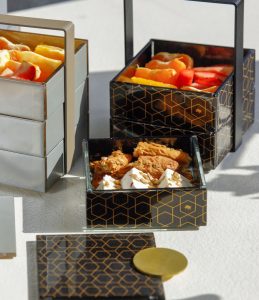
Afternoon Tea Bento Box in glass. Covered compartments seal each course individually before service.
Why Glass Works for This Format
Glass is not the obvious choice for this format. Lacquer is traditional, ceramic is common, and both hide the contents until the cover comes off. Glass, however, does the opposite. The compartment walls are transparent, so the colour and composition of each course is readable from the side before the guest touches anything. Because of this, plating means something different in this context. The chef is not composing for a top-down view only. They are also composing for the profile, and the two perspectives rarely ask for the same decisions.
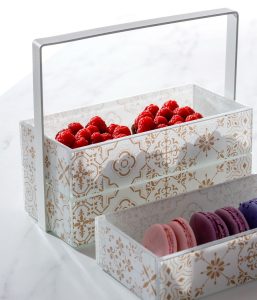
The glass walls make each compartment readable from the side. Colour contrast between courses is visible before any cover is lifted.
The high tea bento box version scales the format for a fuller menu. Savoury courses sit in their own compartments alongside the sweet, and the separation keeps flavours distinct throughout service. Both formats are dishwasher-rated for commercial cycles and available in clear glass or bespoke colour finishes. For the tiered glass stand format where a shared presentation suits the service context better, browse the 3 Tier Afternoon Tea Stands collection.
Plating the Glass Bento Box: Decisions the Kitchen Now Controls
The compartment structure forces decisions that a plate or a stand does not. How many courses? What order? What colour contrast reads well through the glass side wall? A chef working this format for the first time usually starts with the obvious progression, savoury to sweet. However, the glass quickly gives them a second composition to consider. A dark ganache sitting next to a white cream reads differently through the side wall than it does from above. The profile view is therefore a plating surface, and it rewards the same attention the top view gets.
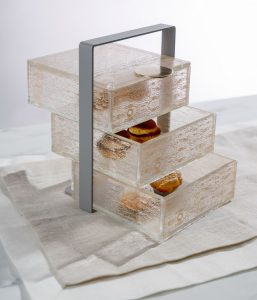
Plating the afternoon tea bento box requires composing for both the top-down and side profile views.
The bento box afternoon tea format also reduces what the service team has to carry and set. One vessel replaces the stand, the side plates, the serving tongs, and the extra crockery a conventional afternoon tea cover requires. The kitchen plates in one pass, covers and seals the vessel, and it goes to the table complete. In a hotel tea lounge running two or three sittings a day, that reduction in service steps is meaningful. For a look at how a tiered bento structure applies to Japanese fine dining contexts, see The Jubako Bento Box and how the same compartment logic translates across different menu formats.
Three Service Contexts Where the Format Works
The afternoon tea bento box travels further than the tea lounge. In-room dining is the clearest application. A covered bento box keeps courses fresh and separated during room service transit in a way an open plate cannot manage. The cover stays on until the guest lifts it, and the individual compartments prevent any contact between savoury and sweet items throughout delivery. Room service afternoon tea is an offering more five-star properties are adding to their menus, and as a result this format makes it possible without compromising presentation.
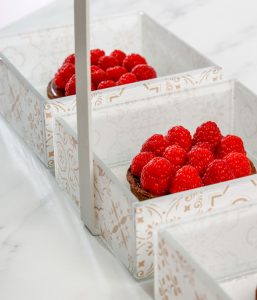
Covered compartments keep afternoon tea courses separated and fresh throughout in-room dining delivery.
Private dining and corporate events are a second context. When a host needs a consistent presentation across every cover simultaneously, the individual bento format delivers what a shared stand cannot. Every guest receives the same composition, plated identically, and so the kitchen controls the experience completely. View the Afternoon Tea Cake Stands Catalogue for the full range of glass afternoon tea vessels across both bento and stand formats.
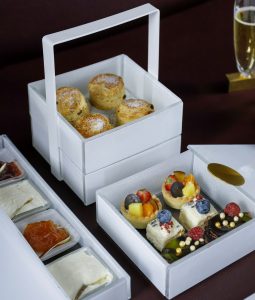
Individual glass high tea bento box for private dining. Every cover receives the same composition at the same moment.
Outdoor hospitality is the third. Pool terrace service, garden party catering, and resort beach club menus all face the same problem: an open plate is vulnerable between kitchen and table. The covered bento format solves it without asking the kitchen to change the menu or adapt the plating process. For the broader range of glass dessert and afternoon tea vessels, browse the Dessert Serveware collection.
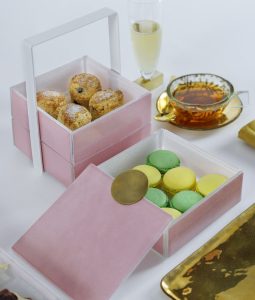
Glass high tea bento box in outdoor resort service. The covered format protects presentation between kitchen and table.
FAQ
What is an afternoon tea bento box?
An individual covered glass vessel with separate compartments for each course of an afternoon tea menu. MyGlassStudio makes it in handmade glass for hotel and fine dining service.
How does it differ from a tiered afternoon tea stand?
The bento box is individual and sealed. Each guest receives their own vessel, giving the kitchen full control over portion size, sequence, and presentation rather than a shared display.
Is it suitable for room service?
Yes. The covered compartments keep courses separated and fresh throughout in-room dining transit, making hotel room service afternoon tea viable without compromising presentation.
Can it be produced in custom colours?
Yes. MyGlassStudio offers bespoke colour matching so the vessel aligns with a hotel or restaurant brand identity or seasonal menu theme.
What is the difference between the afternoon tea and high tea bento formats?
The high tea bento box includes additional compartments for savoury courses alongside the sweet, reflecting the fuller high tea menu structure.