

The Jubako Bento Box and What It Brings to a Restaurant Table
Japan has been stacking food in tiers for centuries. The Jubako Bento Box started as lacquered wood, a ceremonial container for New Year feasts where each compartment held a specific food with specific meaning. Chefs today borrow that structure for a different reason. The tiers create a sequence. The guest lifts the first lid, works through that tier, then moves to the next. That progression is hard to engineer on a flat plate, where everything sits exposed and the diner decides the order. A jubako decides it for them. MyGlassStudio makes this vessel in glass, which changes one thing significantly. The sides are transparent. So the food is visible through the walls before any lid is lifted. The composition has to work from the outside in, not just from above.
The glass bento jubako is handmade and designed for commercial hospitality use , heat-resistant, dishwasher-rated, and available in clear or custom colour finishes. Browse the Bento & Lunch Box Design collection to see the formats currently available.
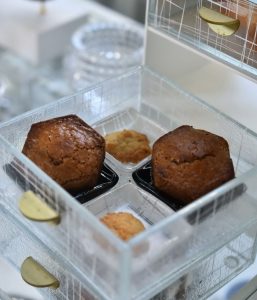
Tiered Jubako Bento Box in clear glass. Three stacking tiers, each with a fitted cover.
The construction is close to the original format: three or four tiers, each self-contained with its own cover, stacking directly on top of each other without a separate stand. What changes in glass is the reading distance. A chef can plate for the profile view, not just the top-down view. That is a different spatial problem , and for a plating-focused kitchen, a more interesting one.
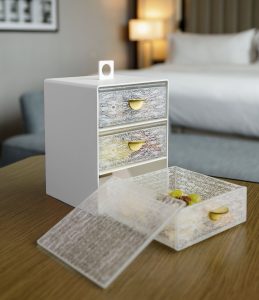
The tiered structure stacks without a stand. Each tier has its own fitted glass cover.
Glass reads differently at table than lacquer does. It catches light, it shows the food inside through the walls, and it sits lighter on a formal table setting than a painted or matte surface tends to.
How the Japanese Jubako Works in Modern Plating
A japanese jubako asks the kitchen to make decisions that a flat plate does not. The tier count sets the course structure before service begins. Three tiers means three distinct moments: a chef working omakase might put something cold and acidic in the first, something warm and umami-forward in the second, something sweet or textural in the third. The sequence is fixed. The guest follows it or breaks it. Either way, the kitchen has made a statement about order , which is rarer in Western plating than it should be.
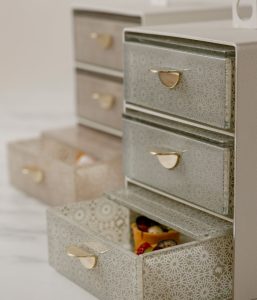
Clear glass walls make the plating composition readable from the side, not just from above.
Glass adds a layer to that decision. Because the walls are clear, how the tiers look stacked matters as much as how each tier looks individually. Colour contrast between compartments is visible from the side. Portion height is readable before the lid comes off. A Pink jubako bento box works differently from a dark-toned version in this respect , the translucency of a lighter colour lets more light through, so the food inside reads more clearly through the wall. That is a plating variable that does not exist in opaque formats. For related glass formats that work in Japanese and pan-Asian dining contexts, browse the Asian Style Dinnerware collection.
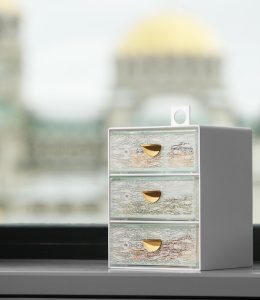
The colour and composition of each tier is visible through the glass walls before the lid is lifted.
Room service and in-room dining are formats where the jubako earns its place quickly. A single vessel carries a structured meal without additional crockery, the covered tiers keep food at temperature longer than an open plate does, and the object itself is interesting enough that it contributes to the guest experience rather than just containing the food. See how the Japanese Style Bento Box has been applied in food styling contexts for reference on compositions that translate to live service.
The Tiered Jubako Bento Box Across Service Formats
The Tiered Jubako Bento Box fits more service formats than it first appears to. Afternoon tea is one: the savoury and sweet separation that a two- or three-tier stand usually handles can be reframed as a jubako service, with each tier holding a distinct part of the menu. Banqueting is another , a compact individual-portion vessel for large-cover events reduces plating time and removes the need for multiple plates per cover. Pool and beach dining is a third. The covered tier format keeps food protected between kitchen and table in outdoor environments where an open plate is vulnerable to heat, wind, and insects.
The Jubako Box Tiered design is also practical in storage terms. Because the tiers nest and stack, they take up less space than an equivalent number of individual plates. And because the vessel is visually self-sufficient, it reduces the table décor requirement , it does not need accompaniment to look considered. For a procurement team running a cost-per-cover analysis against a standard plate plus accompaniments, the comparison is usually favourable. View the Bento Dinner Plates Catalogue for covered and tiered glass formats suited to each of these service contexts.
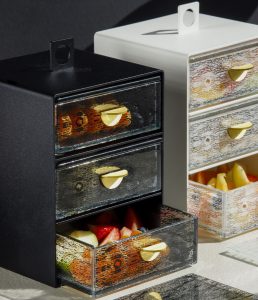
Glass Jubako Bento Box in outdoor dining service. Covered tiers protect food between kitchen and table.
The jubako bento format also crosses well into afternoon tea and dessert service when the kitchen wants to separate sweet courses by texture or temperature. Cold components in the first tier, warm in the second, ambient in the third , the glass walls make the temperature contrast visible before service begins. For individual glass bento plate formats without the tiered structure, browse the Restaurant Serveware collection.
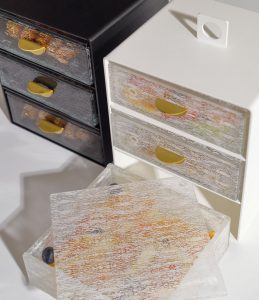
The jubako format applied to afternoon tea and dessert service in a hotel dining context.
FAQ
What is a Jubako Bento Box?
A jubako is a tiered Japanese vessel used for ceremonial and multi-course meals. MyGlassStudio makes it in handmade glass for restaurant and hotel service.
How many tiers does the glass jubako come in?
The standard format has three stacking tiers, each with a fitted cover. Custom tier configurations are available on request.
Is the Jubako Bento Box dishwasher-safe?
Yes. Each piece is kiln-fired for durability and rated for commercial dishwasher cycles under standard service conditions.
Can the jubako be made in a custom colour?
Yes. MyGlassStudio offers bespoke colour matching so the vessel aligns with a hotel or restaurant’s brand palette.
Which service formats work best with the tiered jubako?
Omakase, in-room dining, afternoon tea, banqueting, and outdoor pool or beach service all suit the covered tier format well.