

Why Glass Pasta Bowls Change What a Chef Can Do at the Pass
The bowl is never a neutral decision. Every chef who has plated a pasta course knows this. The vessel shapes the composition before a single strand of pasta lands in it, its depth determines how sauce pools, its rim width controls negative space, and its surface material affects how light reads the finished dish. Glass pasta bowls add a variable that standard options cannot: translucency. Light passes through the base and edges, lifting colour and sharpening visual contrast in a way that changes how the entire composition reads from the guest’s perspective.
For pasta bowls for restaurants operating at a fine dining level, that visual lift is not decorative, it is functional. It makes the plating work harder. It increases perceived value of menu items before the first bite. Furthermore, it photographs in a way that transfers directly to Instagram appeal, a commercial consideration that no restaurant owner can afford to ignore.
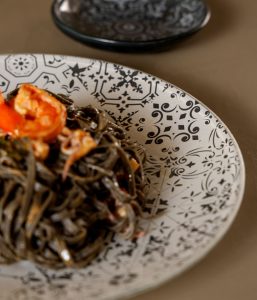
Designer glass pasta bowls for fine dining restaurant service. MyGlassStudio.
Deep Pasta Bowls. When Depth Is a Plating Tool
Depth is not just a volume consideration. In a deep pasta bowl, sauced preparations behave differently. Sauce concentrates toward the centre. The pasta mounds naturally above the liquid line, creating height and visual contrast without additional technique. For brothed pastas, a tonnarelli in a rich guanciale brodo, or a seafood linguine with bisque, depth is essential to keeping the composition coherent from kitchen to table.
Large pasta bowls in a deep format also give chefs the room to build. A generous interior allows layering: pasta as the base, protein placed deliberately above it, a finishing oil dragged across the surface, herbs positioned for balance rather than crammed into a tight space. The bowl becomes a stage. The food performs on it.
For restaurant pasta bowls where portion size is part of the brand narrative, where abundance is the message, a larger, deeper glass vessel signals that intent from across the dining room. Guests register volume and generosity before they read a menu description.

Deep glass pasta bowls for volume-forward restaurant pasta service. MyGlassStudio.
Browse the full range of glass options in the deep bowls collection or explore the broader restaurant bowls collection for format comparisons.
Wide Rim and Rimmed Formats. Control, Negative Space, and the Frame
Not every pasta course calls for depth. Some preparations, a dry-tossed cacio e pepe, a pasta with a delicate agrodolce, a composed cold pasta for an epicurean tasting menu, read better on a flatter profile with a defined rim. Here, the wide rim pasta bowl is the more precise tool.
A wide rim pasta bowl creates a deliberate frame around the composition. The food occupies the well; the rim is empty space, and that emptiness is part of the plating. It draws the eye inward. It gives texture and garnish room to register individually rather than competing with each other for attention. For a chef working with precision portions and architectural plating, this format delivers more control than a deep bowl.
Rimmed pasta bowls also serve the guest differently. A defined rim gives the eye a resting point. It signals considered presentation, a dish that has been thought about rather than assembled. That signal translates directly to guest impressions and the perceived value of the course.
Angled pasta bowls occupy a middle position. The sloped interior concentrates sauce toward the centre without requiring full bowl depth, making them well suited to preparations with moderate liquid content. Designer pasta bowls in an angled format work particularly well in modern and contemporary restaurant concepts where the vessel shape is part of the visual identity of the table.
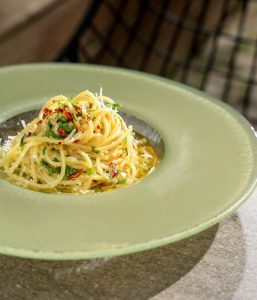
Wide rim glass pasta bowl, negative space framing for fine dining composition. MyGlassStudio.
Glass as a Brand Decision for Restaurant Owners
Choosing glass serving bowls for pasta is a brand statement. Modern pasta bowls in glass communicate that a kitchen takes presentation as seriously as it takes cooking. The material is contemporary, stylish, and immediately distinctive on a table, and distinctiveness is one of the few things a restaurant can control completely within its own four walls.
The durability question is direct. MyGlassStudio glass is dishwasher-safe at 90°C / 194°F. All pigments and colours are fired into the glass body at high temperature, not applied as a surface treatment. They will not scratch, fade, or haze through a full season of high-frequency service. A pasta dish plate that holds its finish for two years costs less operationally than one that deteriorates and requires replacement in six months. That is the durability-versus-cost calculation that matters.
Glass pasta bowls from MyGlassStudio are also produced to tight dimensional tolerances. Every bowl in a set of two hundred matches the last, same rim width, same depth, same finish. That consistency is what a table of ten looks like when it works: uniform, intentional, and reinforcing of brand identity without calling attention to itself.
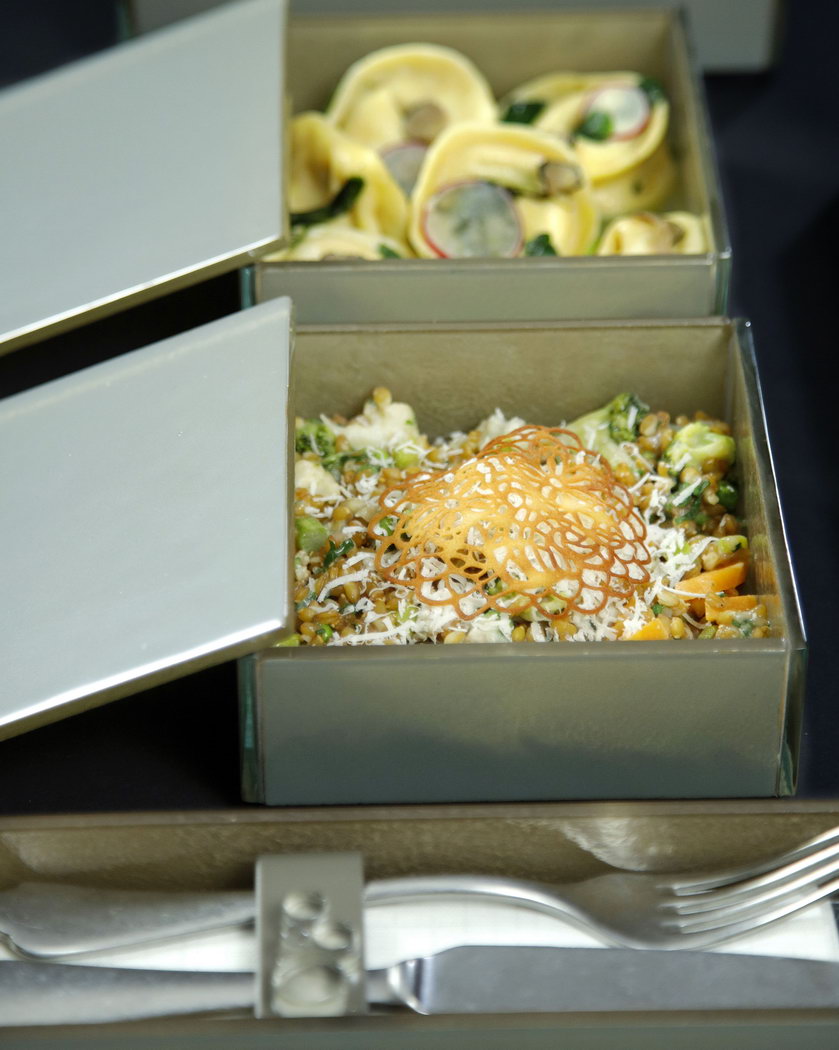
Modern glass pasta serving dish, a brand identity choice for contemporary restaurant concepts. MyGlassStudio.
For reference on how vessel design shapes the dining experience, research published by Frontiers in Psychology has documented how plate and bowl shape influences taste perception and guest satisfaction. The Hospitality Design resource also covers how operators are using tableware as a deliberate brand differentiator in competitive dining markets. You can also browse the complete restaurant dinnerware collection to explore the full range of glass formats available.
FAQ
What depth should a glass pasta bowl be for restaurant service?
For sauced and brothed preparations, a depth of 5–7cm works well. For drier, composed pastas, a shallower wide rim format in the 3–4cm range gives chefs more control over the plating.
Are glass pasta bowls suitable for high-volume restaurant service?
Yes. MyGlassStudio glass is dishwasher-safe at 90°C / 194°F with pigments fired into the glass body, not surface-coated. Finish holds reliably through high-frequency wash cycles across a full service season.
What is the advantage of a wide rim pasta bowl over a standard bowl?
A wide rim creates negative space around the food composition, giving chefs a defined frame and drawing the guest’s eye to the plating. It signals considered presentation and increases perceived value of the course.
Do glass pasta bowls affect the temperature of served pasta?
Glass retains heat effectively when pre-warmed, a standard practice in professional kitchens. Pre-warming glass pasta bowls before service ensures the dish holds temperature from pass to table.
Can MyGlassStudio produce custom glass pasta bowls for a restaurant concept?
Yes. We develop bespoke glass collections matched to a restaurant’s interior palette, brand identity, and service format. Contact us to discuss a custom commission.