

Japanese Dinnerware and the Discipline of the Table
Japanese cuisine does not separate food from vessel. In Japanese gastronomy, the plate, bowl, tray, and rest are considered as deliberately as the preparation they carry. Each piece has a role, not just functional, but compositional. Specifically, the vessel shapes how the guest reads the dish: its temperature, its texture, its sense of occasion. This is not decoration. It is the discipline of the table, and it has been refined over centuries.
Why the Vessel Is a Plating Decision
For chefs working with Japanese cuisine or drawing on Japanese plating principles, this means that Japanese dinnerware decisions are plating decisions. The wrong vessel does not merely look incorrect. In fact, it misreads the dish entirely. It signals a kitchen that understands the food but not the form it belongs in. Conversely, the right piece, the correct depth, the right surface, the appropriate scale, amplifies the composition without competing with it.
Why Glass Works in Japanese Presentation
Glass brings a specific quality to this discipline. It introduces translucency, surface depth, and a clarity of finish that works with the visual language of Japanese presentation.Notably, light passes through a japanese glass bowl and lifts the colour of a dashi, a ponzu, a compressed vegetable arrangement. Similarly, a glass japanese sushi tray reads the negative space around each piece of nigiri with a precision that opaque materials cannot match. Furthermore, glass is non-porous and non-reactive, it will not absorb flavour, colour, or aroma, which matters in a cuisine where subtlety is the standard.
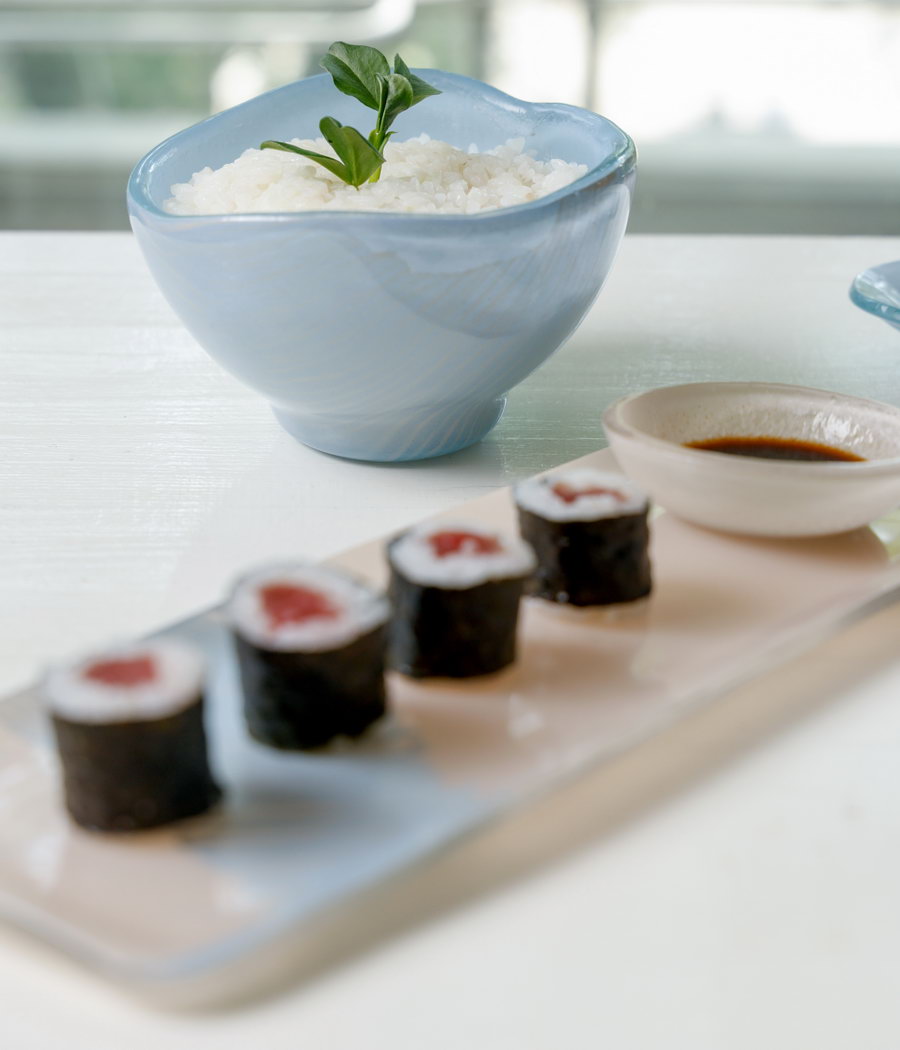
Designer glass Japanese dinnerware for fine dining restaurant service. MyGlassStudio.
Japanese Sushi Plates and Trays. Composition at the Pass
Sushi service is one of the most visually precise forms of food presentation in professional kitchens. Each piece is placed once. There is no adjustment after the tray leaves the pass. The negative space around each item, the visual contrast between the fish and the vessel, the balance of the arrangement across the surface, all of it is decided in the moment of plating.
Glass Sushi Plates. Amplifying Colour and Visual Contrast
Japanese sushi plates in glass give chefs a surface that amplifies rather than competes. The translucency of the material means the colour of each piece, the deep red of a maguro, the pale translucence of a hirame, the amber of a marinated salmon, reads with full intensity against the glass surface. Unlike dark slate or heavily textured materials, glass does not impose a visual bias. Instead, it is neutral in the best sense: it lets the food speak.
Glass Sushi Trays. Sharing Formats and Omakase Service
Japanese sushi trays for larger sharing formats benefit from the same quality at scale. A rectangular glass tray with clean edges and a flat base gives the chef a defined stage. As a result, pieces can be arranged with precision, spacing can be controlled, and the guest receives the full composition as intended. Browse the full range in the sushi boards and trays collection.
For omakase and epicurean tasting formats, where the sushi course may consist of a single piece presented with ceremony, a smaller glass vessel, a shallow oval, a slim rectangular plate, frames that single piece with appropriate restraint. In particular, the scale of the vessel communicates the value of what it holds. Explore the full range of glass shapes suited to Japanese presentation in the Asian dinnerware collection.
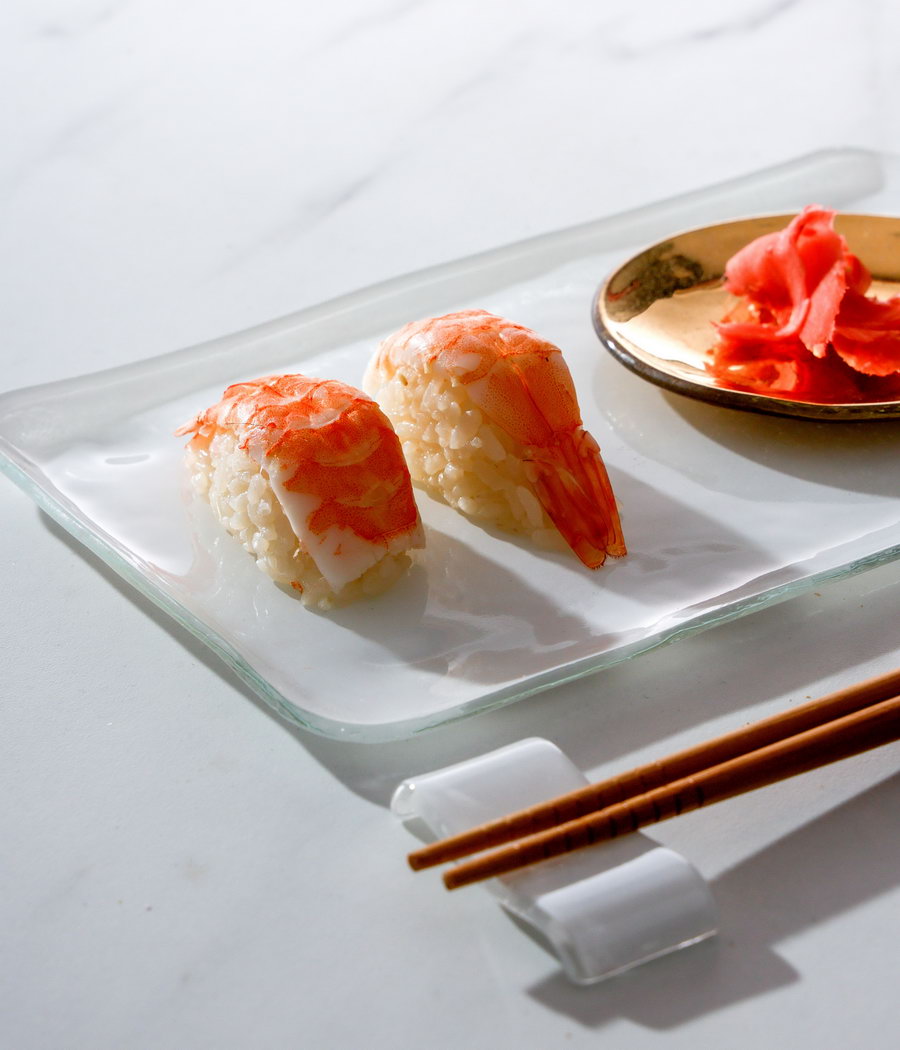
Glass Japanese sushi plates and trays for restaurant omakase and sharing service. MyGlassStudio.
Japanese Serving Trays and the Logic of the Full Table Setting
In Japanese table culture, the serving tray is not an afterthought. It is the container for the meal’s visual identity, the piece that carries all other vessels and establishes the compositional logic of the cover before a single dish is touched. Consequently, a Japanese serving tray in glass brings coherence to a full Japanese table setting: the surface is consistent, the finish is uniform, and the translucency creates a visual through-line from one vessel to the next.
For restaurants running a Japanese set menu or a kaiseki-influenced format, a glass serving tray defines the aesthetic of each course. The chef’s plating decisions land within a consistent visual frame. Furthermore, for bar and lounge concepts serving Japanese small plates, a yakitori bar, a Japanese whisky lounge, a modern izakaya, a glass tray elevates the presentation of snack-format service without requiring a full formal table setting.
Versatility Across Service Formats
Japanese tableware for this kind of setting demands versatility. Specifically, the same tray needs to carry a dipping bowl, a small plate, and a chopstick rest without visual conflict between the pieces. Glass achieves this because its surface does not assert a colour, texture, or material identity of its own. As a result, it recedes and lets the arrangement read as a unified composition.
The oshibori tray, the vessel used to present the warm towel at the opening of a Japanese dining experience, is a detail that most guests register without consciously noting. Nevertheless, a glass oshibori tray communicates precision and modernity at the very first moment of the meal. Browse the oshibori tray collection for glass options suited to Japanese restaurant service.
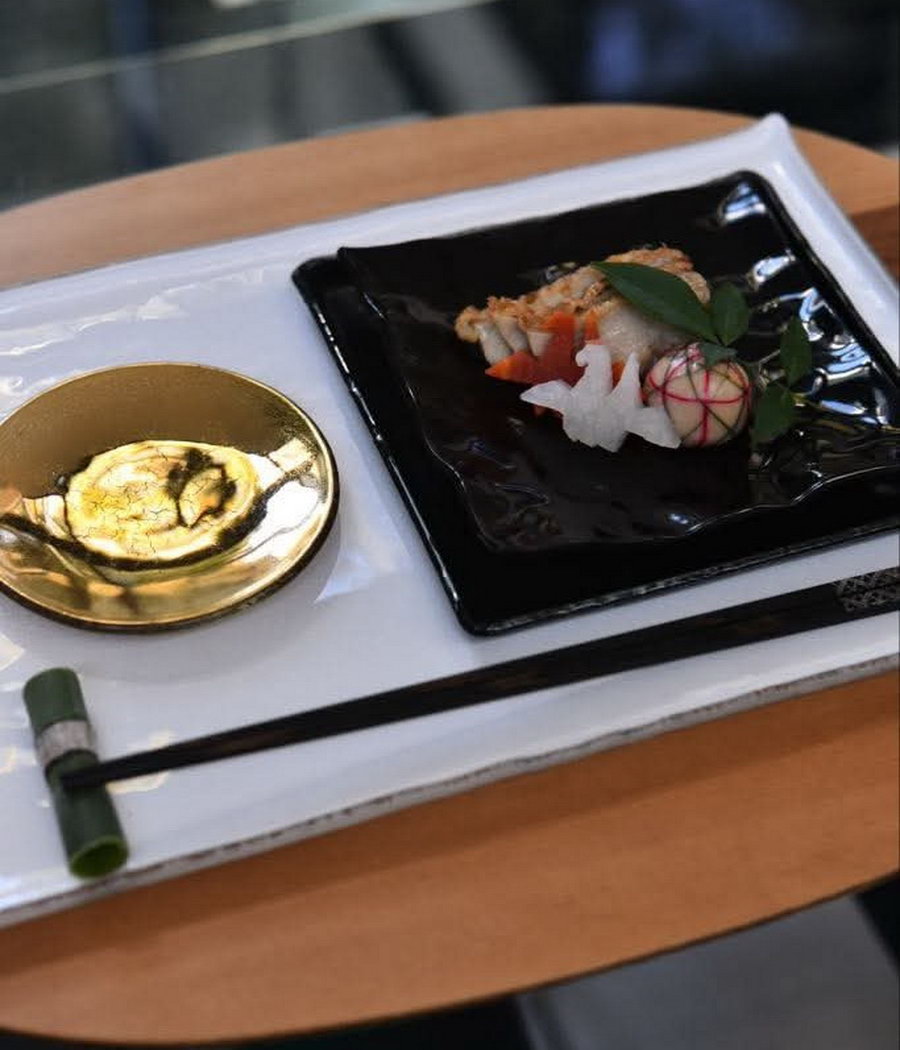
Glass Japanese serving trays for restaurant and bar fine dining service. Plated beautifully by Nana Miyazawa for MyGlassStudio.
Chopstick Rests, Dipping Bowls, and the Details That Define a Cover
The quality of a Japanese table setting is measured in its details. A chef can plate a dish with precision and lose the effect the moment a guest picks up a mismatched chopstick rest or reaches for a dipping bowl that reads as an afterthought. These are small pieces. Their surface area is minimal. Yet they occupy the guest’s eye line throughout the meal, and their finish, or lack of it, communicates volumes about the kitchen’s standards.
Chopstick Rests. Completing the Cover
A japanese chopstick rest in glass maintains the visual language of the cover through the full meal. It does not compete with the dinnerware. Instead, it completes it. The same logic applies to the japanese chopstick holder used in bar and lounge formats where chopsticks are presented upright in a vessel rather than rested horizontally. Browse the full glass range in the cutlery and chopstick rest collection.
Soy Sauce Dipping Bowls. Performance Through Service
Japanese soy sauce dipping bowls are the most frequently used condiment vessel in Japanese service. They appear at every cover, they are refilled through service, and they are washed and returned to the table dozens of times in a single session. As a result, a glass dipping bowl must hold its finish through this cycle without clouding, scratching, or absorbing colour from soy or ponzu. Moreover, the non-porous surface is food-safe and easy to sanitise, a practical quality that matters in a professional kitchen. Explore the dip bowls and condiments collection for glass formats suited to Japanese dipping service.
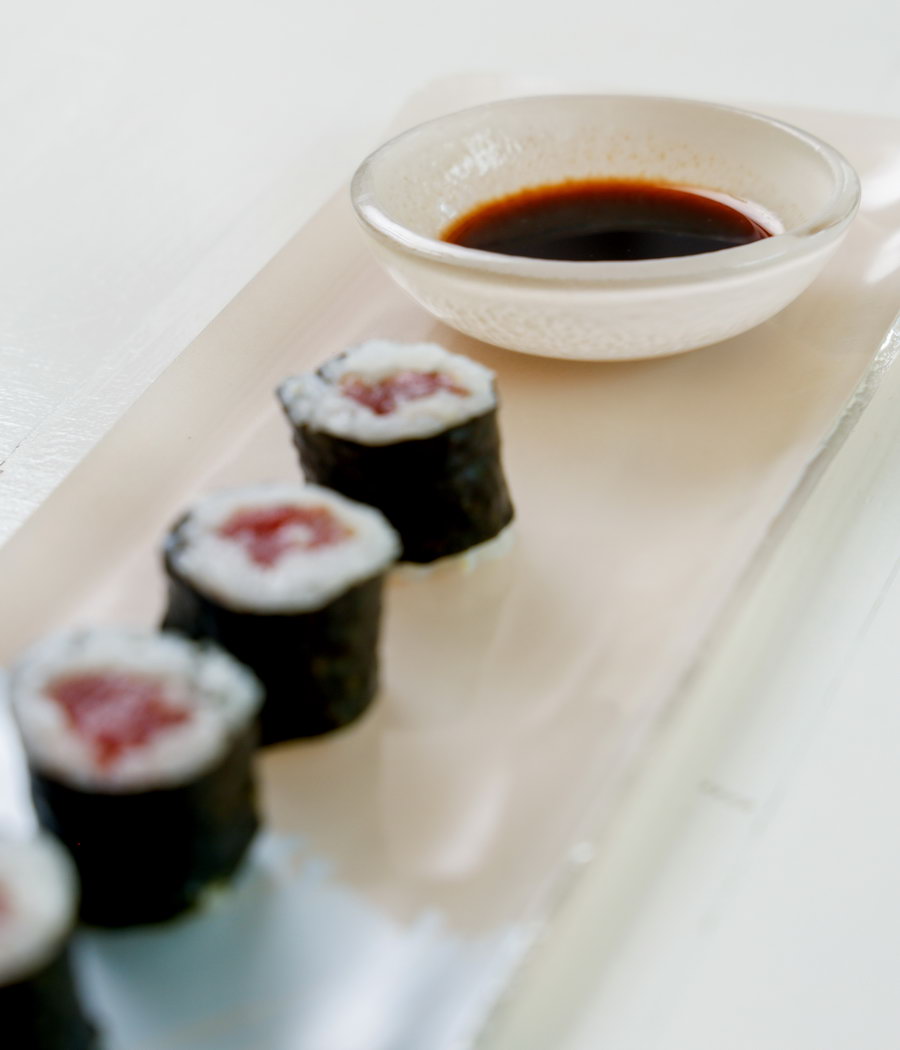
Japanese soy sauce dipping bowls for restaurant table settings. MyGlassStudio.
Japanese Bento. Structure, Compartment, and Modern Presentation
The bento format has moved well beyond its origins. In contemporary restaurant gastronomy, the Japanese bento is a multi-course presentation within a single vessel, a structured composition where each compartment carries a distinct preparation, and the arrangement of those preparations across the tray tells a deliberate story. For a lunch service, a set menu, or a corporate dining format, the bento is both operationally efficient and visually compelling.
Glass Bento Vessels. Visual Transparency as a Design Tool
Glass bento vessels bring a modern, designer quality to this format that traditional lacquer or plain white options cannot replicate. The transparency of the material reveals the composition before the guest lifts a single piece. Additionally, the compartment structure provides the chef with a defined grid, negative space, balance, and visual contrast are all built into the format before plating begins. Furthermore, glass bento pieces are dishwasher-safe at 90°C / 194°F, which matters in any kitchen running bento as a high-volume service format.
Browse the dedicated Japanese-style bento box collection or view the full Bento Dinner Plates Catalogue for the complete range of glass bento formats available. For context on the broader bento dinnerware programme, the bento dinner plates page covers format options in full.
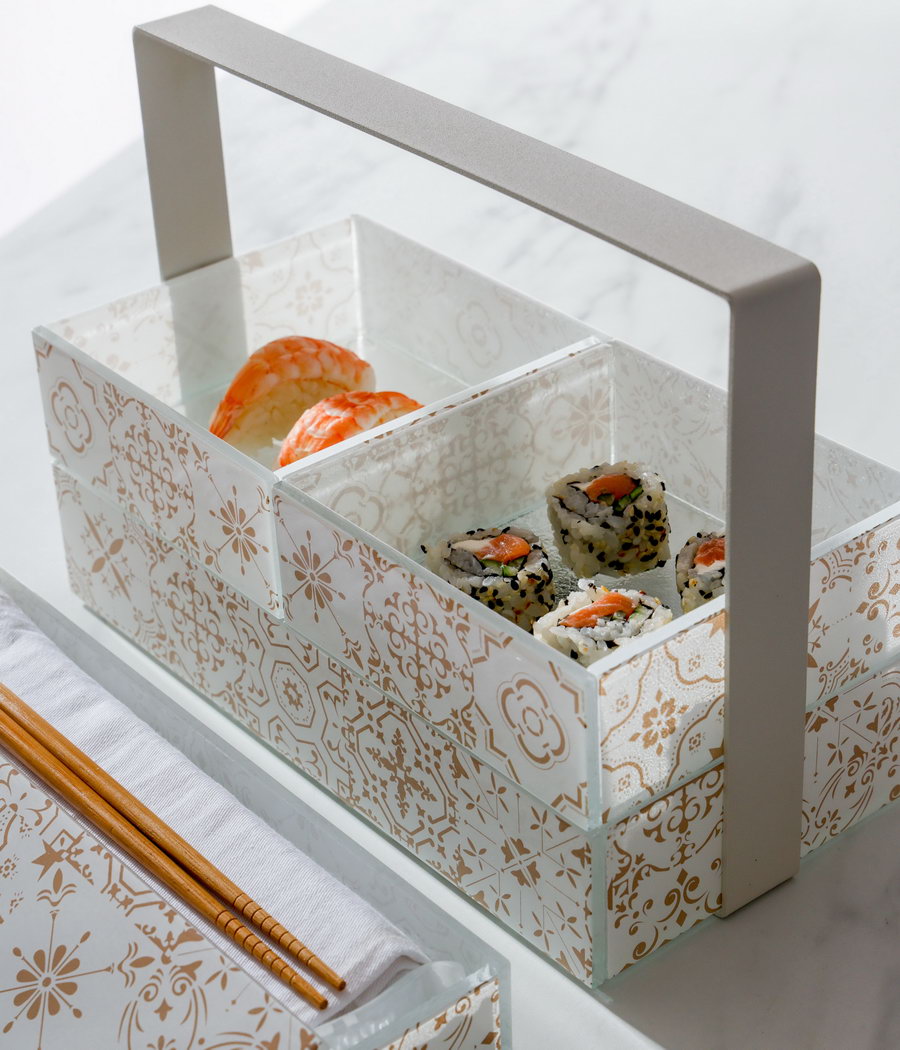
Modern glass Japanese bento presentation for restaurant set menu and lunch service. MyGlassStudio.
Asian Restaurant Dinnerware. Durability, Brand Identity, and the Operational Case
Switching a Japanese or Asian restaurant concept to glass dinnerware is a brand decision as much as a product decision. Asian restaurant dinnerware in glass communicates a kitchen that takes presentation seriously, modern, stylish, considered. It signals to guests that the aesthetic of the table has been designed with the same intention as the menu. In a competitive restaurant market, that signal has commercial value.
Operational Performance and Durability
The operational argument is equally clear. MyGlassStudio glass is dishwasher-safe at 90°C / 194°F. All colours and surface treatments are fired into the glass body at high temperature, not applied as coatings. Consequently, they will not scratch, cloud, haze, or fade through a full service season. The retardation value across every piece stays below 250nm, ensuring structural consistency with no weak points. For a restaurant running Japanese service across multiple covers daily, this durability translates directly into a lower total cost of ownership compared with options that deteriorate and require early replacement.
Consistency as a Brand Signal
Consistency matters too. A full japanese tableware programme where every piece, from the sushi plate to the dipping bowl to the chopstick rest, matches in finish, translucency, and surface quality reads as a professional, intentional operation. Guests register this even when they cannot articulate it. It is, in fact, part of what earns a return visit. Browse the complete restaurant dinnerware collection to explore the full range of glass formats available for Japanese and Asian restaurant programmes.
For further reference, The Japan Times Food section covers the evolving role of tableware in Japanese dining culture. Similarly, the Hospitality Design resource documents how leading operators are using tableware as a deliberate brand differentiator in premium Asian restaurant concepts globally.
FAQ
What makes glass a suitable material for Japanese dinnerware in a restaurant?
Glass is non-porous, non-reactive, and will not absorb flavour, colour, or aroma, essential in a cuisine where subtlety defines the dining experience. It is also dishwasher-safe at 90°C / 194°F for professional service.
What glass formats work best for Japanese sushi plates in a restaurant setting?
Flat rectangular plates, shallow ovals, and slim oblong formats work best. They provide a clean surface for precise nigiri placement and allow negative space around each piece to read clearly.
How do glass chopstick rests improve a Japanese table setting?
A glass chopstick rest maintains the visual language of the cover throughout the meal. It matches the finish of the dinnerware and communicates the same level of design intention as the plates and bowls it accompanies.
Are glass Japanese serving trays practical for high-volume bar and lounge service?
Yes. Glass serving trays are dishwasher-safe, non-porous, and hold their finish through repeated service cycles. They suit both formal set menu service and informal bar and lounge small plate formats.
Can glass soy sauce dipping bowls withstand repeated dishwasher cycles?
Yes. MyGlassStudio glass is rated to 90°C / 194°F and produced with colours fired into the glass body. Finish holds reliably through high-frequency wash cycles without absorbing soy or ponzu colour.
What is the advantage of a glass bento over a traditional lacquer or white format?
Glass reveals the composition before the guest engages with the meal, creating an immediate visual impact. The transparency amplifies colour contrast between compartments and reads as a modern, designer choice.
Do glass Japanese dinnerware pieces work for omakase tasting menus?
Yes. The restraint and precision of omakase service is well suited to glass. The material amplifies the visual quality of each individual piece without imposing its own texture or colour bias.
How does glass asian restaurant dinnerware affect perceived value for guests?
Glass creates visual lift, it amplifies colour and surface texture in food. This increases perceived value of the dish before the first bite and contributes to the overall impression of a considered, premium dining experience.
Can MyGlassStudio produce bespoke Japanese dinnerware matched to a restaurant’s interior concept?
Yes. We develop fully bespoke glass collections for restaurant concepts, matched to interior palettes, brand identity, and service format. Contact us to discuss a custom Japanese dinnerware programme.
What glass pieces complete a full Japanese restaurant table setting?
A complete glass Japanese table setting typically includes: sushi plates or trays, a serving tray, dipping bowls for soy and condiments, a chopstick rest, and an oshibori tray. All are available in glass from MyGlassStudio.