

Sanitized dinnerware is a foundation of professional food service, and the choice of material determines how reliably a venue achieves genuine hygiene. Furthermore, not all dinnerware materials sanitize equally. Moreover, MyGlassStudio glass dinnerware offers the most complete hygiene profile of any material currently used in hospitality: non-porous, resistant to cleaning chemicals, dishwasher-safe, and free of lead and cadmium. The culture of first-rate hygiene has always guaranteed restaurants a loyal clientele, and the standards guests expect have only risen.
Sanitized Dinnerware. Choosing the Right Material
Selecting dinnerware based on aesthetics alone risks overlooking material safety. Furthermore, the temptation to choose pieces that match a restaurant’s interior without checking food safety compliance is common. Moreover, understanding which materials qualify as safely sanitized serveware protects both guests and the venue’s reputation. The top dinnerware materials for professional use each have distinct hygiene profiles.
Vitrified glass fires at high temperature through vitrification, making it non-porous and durable. Furthermore, it is dishwasher-safe and resists staining. Porcelain also fires at high temperatures and is non-porous when glazed, though if it cracks, bacteria can enter the material. Moreover, melamine is affordable and hard to shatter, but its porous material harbours bacteria and it is not oven or microwave safe. Ceramics vary widely, not all ceramic materials are equally non-porous or durable. Wood is porous and cannot go in the dishwasher. Lacquerware cannot wash in water at all. Marble is porous and difficult to disinfect properly.
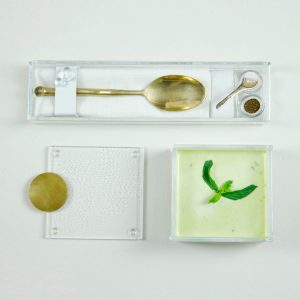
Sanitized dinnerware, bento soup bowl with lid by MyGlassStudio.
Glass stands apart from all other materials on the hygiene spectrum. Furthermore, its non-porous surface resists stain absorption and inhibits bacterial growth. Moreover, sanitized tableware in glass withstands sodium hypochlorite, kitchen acids like lemon and vinegar, and professional cleaning products, without any effect on the surface or the colour. In addition, MyGlassStudio colours fuse inside the glass at high temperature, they cannot flake off even with repeated professional dishwashing.
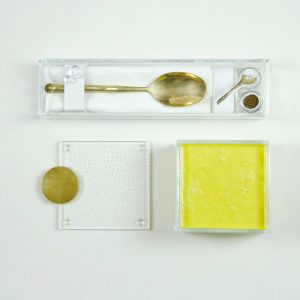
Sanitized tableware, square soup bowl with lid by MyGlassStudio.
Tableware Sanitization. The Three-Step Process
Proper tableware sanitization in a professional kitchen follows three distinct steps. Furthermore, cleaning, sanitizing, and disinfecting serve different purposes, and skipping any step reduces the overall effectiveness of the process. Moreover, glass dinnerware is the easiest material to work with across all three stages.
Cleaning removes dirt and food residue using soap, detergent, and water. Furthermore, this step reduces the rate of infection spread by physically removing organic matter. Moreover, cleaning always comes first, disinfectants and sanitizers do not remove dirt.
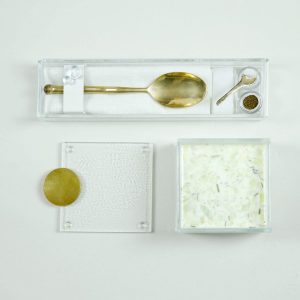
Tableware sanitization, glass soup bowl with cover by MyGlassStudio. Easy to clean, dishwasher-safe and non-porous.
Sanitizing reduces bacteria to safe levels using either a chemical agent or hot water between 170–180°F. Furthermore, for chemical sanitizing, dissolve one tablespoon of sodium hypochlorite in one gallon of cold water. Soak dishes in the solution, remove, and air dry. Moreover, for hot water sanitizing, soak dishes at 170–180°F for approximately 30 seconds, then air dry. In addition, note that sodium hypochlorite with added fragrance is not effective as a sanitizer, use unscented chlorine bleach.
Dish sanitizing on glass is particularly effective because the non-porous surface allows no bacterial penetration. Furthermore, unlike ceramics or porcelain with micro-cracks, glass maintains its barrier properties indefinitely. Moreover, even with daily professional dishwashing, MyGlassStudio glass dinnerware resists degradation of its surface.
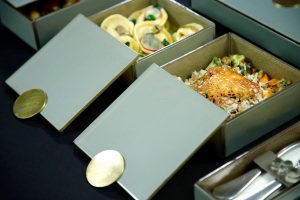
Sanitized dinnerware, bento pasta plate by MyGlassStudio.
Disinfecting follows sanitizing and targets cooking surfaces, storage cupboards, and countertops. Furthermore, mix ¼ cup of sodium hypochlorite with one gallon of water, wipe surfaces with a clean cloth, and air dry. Moreover, disinfecting kills remaining germs that cleaning and sanitizing may have missed.
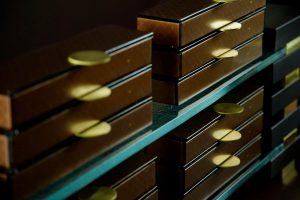
Sanitized dinnerware in use, stylish lunchbox design by MyGlassStudio. Code: SC-17-16-DMZ026021.
Why MyGlassStudio Glass Dinnerware Is the Right Choice
MyGlassStudio glass dinnerware offers five hygiene advantages that no other material matches in combination. Furthermore, its non-porous surface inhibits bacterial and viral penetration. Moreover, dishwasher-safe construction with fused-in colours means no degradation even with daily professional cleaning.
The glass resists sanitizers and alcohol disinfectants, sodium hypochlorite and kitchen acids cause no damage. Furthermore, no animal products go into manufacturing, making it cruelty-free. Moreover, the glass is 100% recyclable and uses colours that are 100% lead- and cadmium-free, protecting both guests and the environment.
Explore our bento dinner plate collection, browse our durable dinnerware range, or contact us at [email protected] for bespoke sanitized dinnerware for your hotel or restaurant.